
Galata & Karaköy: The Neighborhood Guide
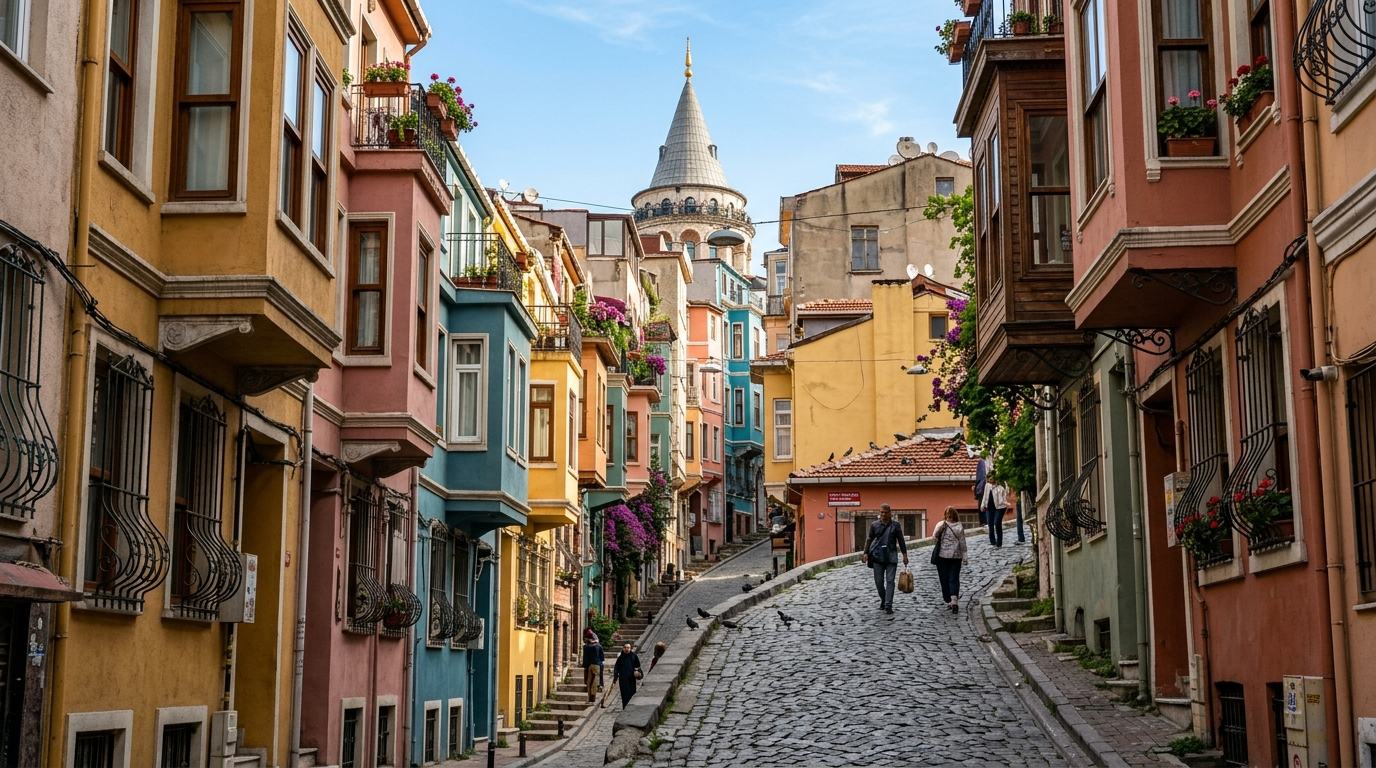
Galata is Istanbul’s old Genoese quarter — a steep wedge of cobbled streets between the tower on the hill and the Karaköy waterfront — and it is the city’s best neighborhood for simply wandering. Seven centuries of layers share a postcode: a medieval watchtower, belle-époque bank palaces, a whirling-dervish lodge, third-wave coffee bars and the most photographed apartment facades in Türkiye, all inside a fifteen-minute walk.
This page is the ground-level companion to the view from the top: what the quarter actually is, and a walkable loop that strings its best corners together.
A trading colony that never quite assimilated
Galata began in the 1260s as a walled colony of the Republic of Genoa, facing Constantinople across the Golden Horn — a city of Italian merchants ruled by its own laws, with the tower (1348–49) as the high point of its fortifications. After the Ottoman conquest it stayed the foreign quarter: Genoese, Venetian, Jewish, Greek, Armenian and Levantine Istanbul lived and banked here, which is why the streets feel more Mediterranean port than imperial capital. The 19th century made Bankalar Caddesi the Wall Street of the Ottoman Empire; the 21st turned the bankers’ buildings into galleries, hotels and museums. The tower’s own political biography is a story for another page — down here, the past is mostly something you walk on.
The loop: tower to water in eight stops
Start at Galata Square, the plaza at the tower’s base — coffee in hand, tower photos everywhere you look (the free angles are mapped on our photo-spots page).
- Serdar-ı Ekrem Caddesi — Galata’s runway: independent designers, vintage dealers and concept stores in chipped 1890s apartment rows. The street’s Doğan Apartmanı courtyard is a cult photo stop.
- Kuledibi lanes — the tangle directly under the tower, where the colorful houses climb the slope. Go early; by noon every doorway has a photoshoot in it.
- Galip Dede Caddesi — the music street: saz, ouds, cymbals and guitar shops shoulder to shoulder uphill toward Tünel, with the tower framed at the downhill end.
- Galata Mevlevi Lodge — the 15th-century dervish hall a minute from the tower, now a museum of the Mevlevi order with whirling ceremonies on select evenings.
- Camondo Stairs — the art-nouveau double-helix staircase the banker Camondo family built so their children could get to school faster. Istanbul’s most elegant shortcut.
- Bankalar Caddesi — the Ottoman bank palaces at the bottom of the stairs, including the old Imperial Ottoman Bank building. Look up: the facades are the show.
- Karaköy — the waterfront grid where the cafe boom lives: roasteries, dessert counters (the cheesecake story starts here), fish-sandwich boats and the Galataport promenade with its museums.
- Galata Bridge — finish among the fishermen at water level, looking back up at the hill you just descended, tower on top. At dusk, cross halfway for the skyline and stay for the night lights.
The whole loop is ninety unhurried minutes — call it three hours with coffee, cake and shopping gravity factored in.
Beyond the loop
Hamam: Kılıç Ali Paşa Hamamı in Karaköy, a 1580s Sinan building restored into one of the city’s finest bathhouses — book ahead. Museums: Istanbul Modern and the Galataport museum row are ten minutes’ walk along the water. Up the hill: Galip Dede delivers you to Tünel Square and the İstiklal Avenue tram, with all of Beyoğlu beyond. Faith and layers: the Arap Mosque — a Genoese Gothic church wearing a minaret — hides two streets from the stairs, the quarter’s history compressed into one building.
Making a day (and night) of it
Galata is compact enough to circle in a morning and rich enough to hold you until midnight. The classic full day: streets and shopping before noon, a long Turkish breakfast or Karaköy lunch, the loop above through the afternoon, then the tower balcony for sunset — entry booked ahead so the golden-hour queue isn’t your problem — and a meyhane or rooftop dinner (our picks) while the tower glows overhead. If that sounds like too much for one day, it is: the hotels around the tower exist precisely so you don’t have to leave.